Universalism in the Early Church
Universalism: The First 500 Years of the Church
Christianity didn’t grow up under some dark porch like moss hiding from the sunlight, but it took root out in the open like a date palm eager to grow up and flourish. Paul, when seized by the Jewish leaders, answered in his own defense, telling King Agrippa that he was sure that none of what he was talking about escaped his attention, given “this thing was not done in a corner”. (Acts 26.26 KJV)
The history and doctrine of the infant church has been well documented in the New Testament. We have many passages written by the Apostle Paul in his epistles that seem as clear as they can be regarding the ultimate reconciliation of all things without exception. Passages in the epistles written by other apostles do the same, as do the writers of the gospels, Acts, and Revelation.
After the Apostles died, a new set of leaders guided the church. Defending it against heresy and the intellectual attack of the pagans, the early church fathers wrote creeds and other statements of faith. These early writings, according to Dr. David Bernard, while not inspired, are very important to understanding the history of the church and its teaching, they can confirm the Apostolic doctrine as revealed in the scripture, and they can trace the development of false teachings.1
The Silence of the Early Church on Eternal Torment
It seems to me that, if eternal conscious torment was a tenet of the early church, there should be something that would suggest as much in the historical record of the first few hundred years. What can we glean from the writings of those who led the early church in the generations immediately following the death of the Apostles?
Christianity was winning converts from among the Jews, Romans, Greeks, Egyptians, and Macedonians. These new converts were bringing with them doctrines colored by Jewish and pagan error. The earliest church fathers, those that were said to have “sat at the feet of the Apostles”, defended Apostolic doctrine against this onslaught of false teaching. Men such as Clement I of Rome (probably the same Clement mentioned by Paul in Philippians 4:3), Ignatius, and Polycarp (both students of the Apostle John) wrote extensively to this end.
Probably the oldest of the statements of faith was known as the Teachings of the 12 Apostles2 , Quoted by Clement of Alexandria, by Eusebius (the 3rd century Christian historian), and by Athanasius (an early bishop of Alexandria), scholars believe it was written somewhere between AD 120 and AD 160. While it addresses a wide variety of subjects from the divinity of Christ, holy living, and the authority of the church to the return of Christ, the great tribulation, the antichrist and trial by fire, it is entirely silent on the duration of punishment. Not a whisper of endless torment is to be found. Absolutely nothing is said about eternal fire.3
The creeds, formal statements of Christian belief, are historically significant because they were authorized by the consensus of bishops. The Apostle’s creed, the oldest known creedal document of the early church (AD 250-350), and the council creeds of Nicaea (AD 325), Ephesus (c. AD 431), and Chalcedon (c. AD 451) along with the statements of faith of the Roman church, the Greek church, and the Alexandrian church all set forth an understanding of the Christian faith through the end of the fifth century.
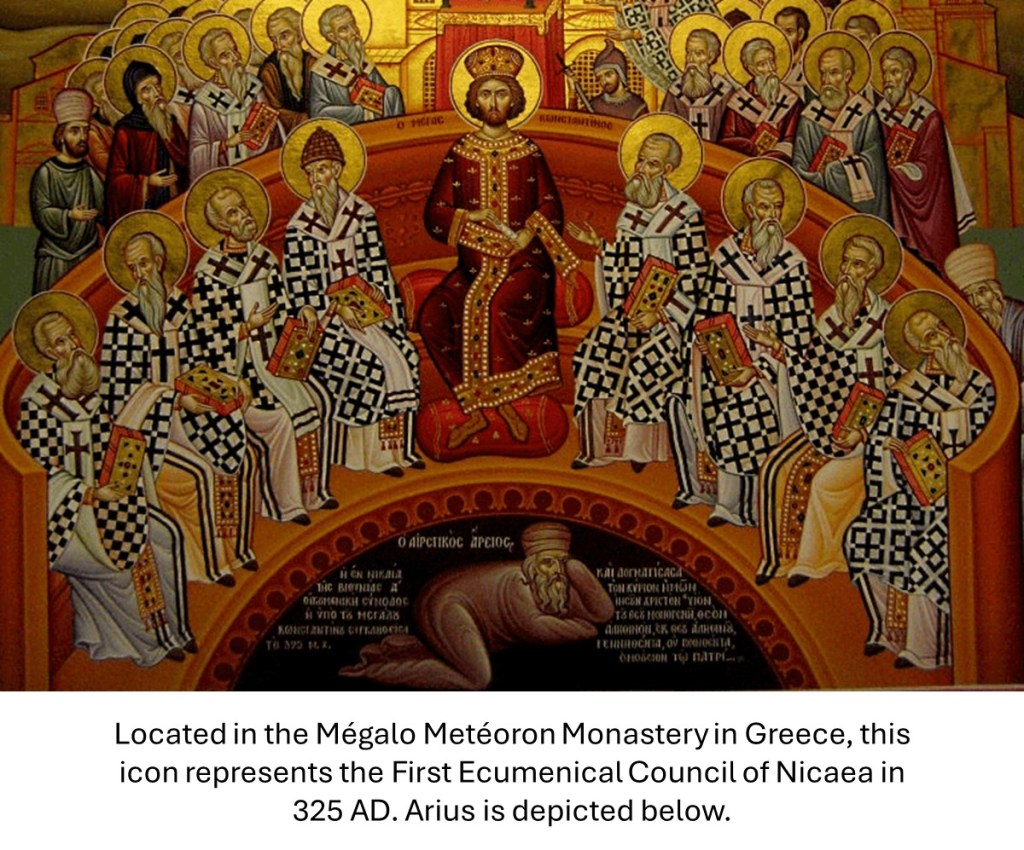
They dealt with the nature of God, creation, the incarnation and divinity of Jesus Christ and His death, burial, and resurrection. They speak of belief in His return to judge the living and the dead, the authority of the church, resurrection of the dead, and life in an age to come. They are completely silent on the duration of punishment. Not a word on eternal fire and torment can be found. It was the Athanasian Creed (c. AD 500), the first to focus on Trinitarian Doctrine, that was also the first to contain an anathema clause, “…they that have done evil into everlasting fire.” It was written in the early 6th century.4
It seems odd that declarations of faith against heretics and to a world that knew little of Christianity would be silent on such a vital doctrine as endless punishment if, at that time, it was a tenet of the church. Could the sound of silence from the creeds indicate that the dogma of everlasting damnation was not held in the early church as a “teaching of the Apostles”, but was a much later development?
My research, for a book on this subject, has taken me to the brink of belief in Universal Reconciliation and beyond. The doctrine of the apokastatasis (the final restoration of all sinful beings to God and to the state of blessedness) appears to have been the prevailing doctrine of the early church for the first 500 years. Many of the early church fathers believed it, taught it, and defended it in their writing.5
One need not rely on the church fathers, however, because this doctrine is well developed in the original scriptures, having been declared the purpose and intent of God since before the ages began, but hidden in plain sight in English versions of the Bible by our presupposition to seeing the eternal conscious torment of the wicked. No more, because it is coming out of hiding and just might be the catalyst to the next great revival. God’s truth always wins.
Frequently Asked Questions (FAQ) That Should Stir Us
Did early church fathers reject eternal torment?
When did church creeds start teaching eternal punishment?
What did early Christian leaders teach about universal salvation?
How did apokatastasis shape early Christian belief?
Why is the Athanasian Creed first to include eternal fire clause?
NOTES
1Bernard, David, K., A History of Christian Doctrine, Volume 1, Hazelwood, MO: Word Aflame Press, ©1995, Pp. 9-10
2Didache. (2022, September 29). In Wikipedia. https://en.wikipedia.org/wiki/Didache
3Hanson, J.W., D.D., Universalism, the Prevailing Doctrine of the Christian Church for the First Five Hundred Years, Boston & Chicago: Universalist Publishing House, ©1899)
4The History and Authority of the Apostles Creed, Apostles Creed, https://apostles-creed.org/confessions-creeds-christian-theology/history-authority-of-the-apostles-creed/, (retrieved 10/10/22)
5Hanson
 Biblical Universalism