Weeping and Gnashing of Teeth
Speaking with a couple of gentlemen recently about God reconciling all things to Himself, the question came up, as it always seems to, “What about being tormented for ever and ever?” I told them not to worry, that there will still be plenty of weeping and gnashing of teeth. The look on their faces was priceless.
Sometimes, our zeal for justice makes us blood thirsty for God’s vengeance upon the world. Just ask the “Sons of Thunder” who earned that name because they were, at times, very confrontational, aggressive, and thick-headed. They were the disciples who wanted to call down fire from heaven on a Samaritan village because they didn’t respond to the gospel (Luke 9:54). This is the spirit that, all too frequently, rides roughshod over the church.
Weeping and gnashing of teeth is a horrendous reaction to devastating news or horrible events. An uncontrollable response, it reflects such anguish on the part of those who experience it that they are out of their minds with grief and pain. One would think that a Christian, presumed to be full of the love of God, would not wish that on their worst enemy. Apparently, this is not the case.
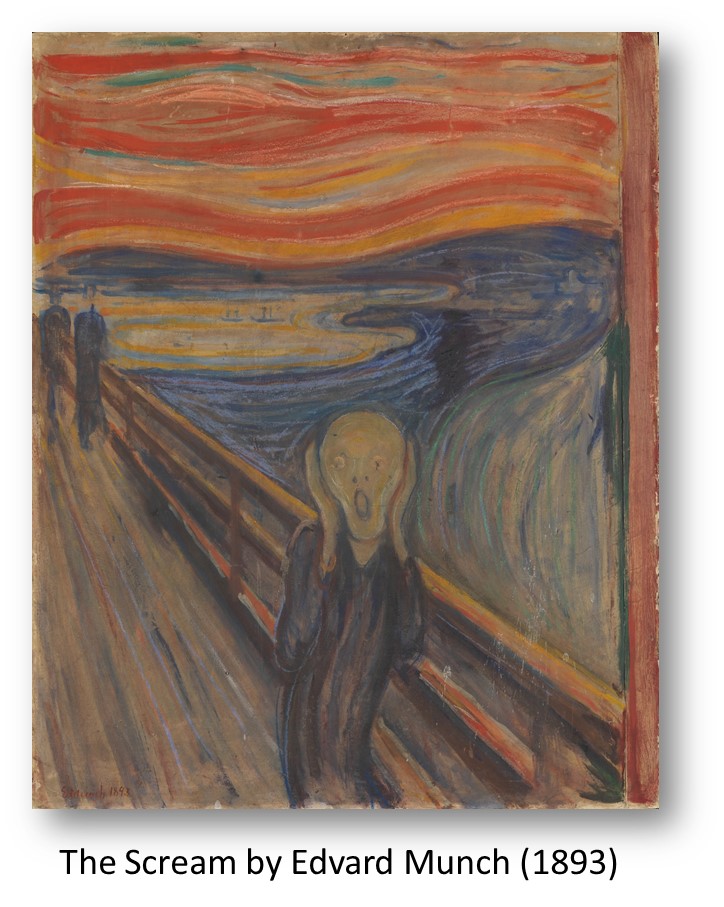
The use of such language in scripture has brought the student of the Bible to associate “weeping and gnashing of teeth” with eternal torment, as though somehow because a passage mentions the phrase in the context of its narrative, that narrative must be dealing with everlasting punishment. That assumption is a long way from the truth.
In the Gospels, for example, Jesus speaks in parables about a variety of things that happen to a variety of people for a variety of reasons that trigger weeping and gnashing of teeth. To get a condensed look, the causes of this reaction are listed below. They are taken from the “weeping [wailing] and gnashing of teeth” scriptures found recorded in the Gospel of Matthew and one in the Gospel of Luke (a parallel passage to Matthew 8:12):
- cast out into outer darkness
- cast into a furnace of fire
- bound and cast into outer darkness
- cut asunder and appointed portion with the hypocrites
- cast into outer darkness
All of these cause weeping and gnashing of teeth in the scriptures. A variety of punishments are included, only one of which sounds somewhat like the typical description of eternal damnation, that of being cast into a furnace of fire. Even then, fire is the only similarity. So, let’s see the list of punishments in the context of the verses in which they appear:
But the children of the kingdom [the Jews] shall be cast out into outer darkness: there shall be weeping and gnashing of teeth. (Matthew 8:12, Luke 13:28)
First, it should be noted that the passage is about the children of the kingdom! That should make us pause before we consign them to everlasting separation from God.
In the context in which both these passages are set, Jesus says that many shall come from the east and the west (Gentiles) to sit down with Abraham, Isaac, and Jacob in the kingdom, but that the children of the kingdom (the Jews) would be cast into outer darkness. This entire passage is given because Jesus marveled at the faith of a Roman centurion (a Gentile) who felt unworthy to have the Lord in his home to heal his servant. He said, “Speak the word only, and my servant shall be healed”.
The Jews were ultimately set aside for a time and Christ turned to the Gentiles with the gospel of salvation. That is what this passage is all about. Outer darkness, here, is not to be confused with being lost, as the Jews are, in the end, saved. (Romans 11:26)
I am not even sure that outer darkness is a phrase that belongs to Eschatology. The Jews have been set aside and the Gentiles have been receiving the Gospel since the first century. At some point, the scales fall from their eyes, and they see their Messiah in Christ Jesus and are delivered from the wrath of anti-Christ. So, not only is it temporary, but the Jews are in outer darkness now!
And the light shineth in darkness; and the darkness comprehended it not. He was in the world, and the world was made by him, and the world knew him not. He came unto his own, and his own received him not.
John 1:5, 10-11
Darkness (Greek: skotia) represents the condition of the spiritually unenlightened, spiritually ignorant, blind.
It is ironic that the Jews of Jesus’ day were confident that they were a guide to the blind and a light for those in darkness (Romans 2:19), but blindness in part has come to them until the fulness of the Gentiles is complete (Romans 11:25). Israel to this day experiences a veiled reading of the Old Testament because their minds were blinded (2 Corinthians 3:14 KJV). They are in outer darkness.
And shall cast them [that do iniquity] into a furnace of fire: there shall be wailing and gnashing of teeth. (Matthew 13:42)
A furnace is more of a word picture describing a refiner’s fire rather than an everlasting fire of torment and is used throughout the scriptures, to describe just that. As a matter of fact, furnace here is translated from the Greek, kaminos, meaning “smelting pot”, “kiln”, or “oven”. The Lake of Fire is in view here and is a corrective and refining act by God upon the unredeemed and not an act of eternal punishment. (See the post entitled Refiner’s Fire for a more thorough investigation of the subject.) The suffering and torment experienced in the purifying fires of God’s correction will, to be sure, cause anguish and weeping and gnashing of teeth in those that must experience it, but it is NOT eternal punishment.
And shall cast them (the wicked severed from among the just) into the furnace of fire: there shall be wailing and gnashing of teeth. (Matthew 13:50)
See the commentary on Matthew 13:42 above.
Then said the king to the servants, “Bind him [the man without a wedding garment] hand and foot, and take him away, and cast him into outer darkness, there shall be weeping and gnashing of teeth.” (Matthew 22:13)
A parable about the setting aside of Israel, represented by those who received but ignored an invitation to the wedding feast of the king’s son, in favor of the Gentiles, en masse, represented here by all those invited to the wedding from the highways.
Jesus compared this wedding for the son of the king to the Kingdom of Heaven – the church. So, the Jews rejection of the invitation represents their failure to believe that Jesus is their Messiah, but the Gentiles accept Him and are represented by the bride.
Among these guests is a man with no wedding garment. He is in attendance; he has accepted the invitation and was allowed into the banquet hall on the strength of it, however, he is discovered by the king himself to be without a wedding garment, found to be without an excuse, bound, and cast into outer darkness.
Neither the king’s son (the bridegroom) nor the bride (the church) is heard from in this parable. One might be tempted to see the Gentile church as being represented by the guests in attendance but that is a leap I wouldn’t make. The church is always seen as the bride. So then, who are these guests at the wedding? Who is represented by the man not dressed in a wedding garment?
Is it possible that this man can be seen as representing those who would attempt to enter the kingdom of heaven on their own merits, without a white garment, which is the righteousness of Christ? (Ephesians 5:27; Revelation 3:5; 19:8) If so, I would speculate, further, that these are Jews, more specifically, Judaizers (Jews who accepted Christianity, but still adhered to the Law of Moses requiring circumcision and worshipped in the temple on the Sabbath). After all, he can only represent one of the two – Jew or Gentile. The fact that he has no wedding garment, sets him apart from the Gentiles in attendance. The king refers to him as “friend” and he is ultimately cast into outer darkness – the same place the blinded Jews are being held, for he is no better off trusting in Moses.
The guests at the wedding cannot be Jews, they didn’t come. Those in attendance cannot be Jewish or Gentile believers, they are represented by the bride. There is only one group of people left to be represented by the guests at the wedding of the King’s Son. Everyone else. This would be Universal Reconciliation.
Outer darkness, again, is not to be confused with being lost, as the Jews are, in the end, saved. (Romans 11:26) There is no evidence that outer darkness represents damnation or that it is forever.
To the contrary, Paul said that the god of this age has blinded the minds of them which do not believe, but that the light of the glorious gospel of Christ could shine on them. (2 Corinthians 4:4). Anyone that is not full of the Holy Spirit cannot understand the things of God (1 Corinthians 2:14). Anyone who does not believe has been blinded by the god of this age and has had their understanding darkened, being alienated from the life of God through the ignorance that is in them, because of the blindness of their heart (Ephesians 4:18).
So, they are bound (by sin), hand and foot, and are in outer darkness, now.
And shall cut him (the abusive and unfaithful servant) asunder and appoint him his portion with the hypocrites: there shall be weeping and gnashing of teeth. (Matthew 24:51)
Do with him what is done with hypocrites. There is only one set of people that Jesus was continually judging and those were the Jewish hypocrites.
Because of this, God in his wisdom said, ‘I will send them prophets and apostles, some of whom they will kill and others they will persecute.’ Therefore this generation will be held responsible for the blood of all the prophets that has been shed since the beginning of the world, from the blood of Abel to the blood of Zechariah, who was killed between the altar and the sanctuary. Yes, I tell you, this generation will be held responsible for it all.
Luke 11:49-51 NIV
The Jewish hypocrites of Jesus day are represented by the abusive and unfaithful servant. “One of the experts in the law answered him, ‘Teacher, when you say these things, you insult us also.’” (Luke 11:45 NIV) Though not mentioned in so many words, they were to be cast into outer darkness (the portion with the hypocrites). There will be weeping and gnashing of teeth.
And cast ye the unprofitable servant into outer darkness: there shall be weeping and gnashing of teeth. (Matthew 25:30)
The servant who hid his master’s money and returned it unused is cast into outer darkness because he failed to use what his master gave him. Once again, I believe we can see a parable as representing the unbelieving Jews – the people of Israel. “Theirs is the adoption to sonship; theirs the divine glory, the covenants, the receiving of the law, the temple worship and the promises. Theirs are the patriarchs, and from them is traced the human ancestry of the Messiah, who is God over all, forever praised! Amen.” (Romans 9:4-5 NIV) To them were entrusted the oracles of God (Romans 3:2), through them came the prophets, through the Jews the promises of God and the mystery of the Gospel are revealed. Jesus said, “To whom much is given, much is required” (Luke 12:48).
This was the last of the “weeping and gnashing of teeth” passages. Neither this phrase nor being cast into outer darkness nor being cast into a furnace of fire can be shown to represent eternal torment. There is nothing in these passages to indicate a correlation. The weeping and gnashing of teeth experienced by those who are judged by God would indicate an excruciating experience, but not one that lasts into eternity and not one that is without the purpose of purification. All of these parables represent unbelieving Jews being cast into outer darkness, but we know that all of Israel will be saved.
All those who do not believe are in outer darkness today and are in danger of being judged by God. If they fail to repent prior to standing before Him at the resurrection of the last day, they will be cast into the Lake of Fire and there will be weeping and gnashing of teeth. It is a fearful thing to fall into the hands of the living God. (Hebrews 10:31)
But that’s not everlasting torment or eternal darkness. Those who interpret it as such have a predisposition to seeing damnation in passages like these which keeps them from understanding them in a different light. They are predisposed to seeing a hell in the scriptures that isn’t there. I know this, because that was me for 40 years. If we can begin to see the scriptures without the predisposition to eternal torment, we will begin to realize that God has a magnificent plan to reconcile all things to Himself.
This is Universal Reconciliation
 Biblical Universalism